

AI Training for Employees in Kenya: Preparing Your Workforce for Artificial Intelligence.
Rapid technological shifts across Nairobi, Mombasa and regional commercial hubs are changing how modern enterprises operate. To remain competitive, investing in AI Training for Employees in Kenya has become an essential strategy for forward-thinking organizations. Stepping into practical digital adoption empowers your staff to leverage cutting-edge tools, streamline repetitive tasks and drive operational efficiency. For expert corporate training, leadership development and workforce upskilling programs tailored to the East African market, visit www.kariukikamau.com.
Why AI Training for Employees in Kenya is Essential for Businesses Today.
Artificial intelligence is no longer limited to tech firms or software engineers. Today, organizations in banking, insurance, telecommunications, agriculture, healthcare and public administration are integrating smart automation into daily operations. While technology evolves quickly, the true driver of digital transformation remains your people. Without structured upskilling, employees often view new software with hesitation or fear job displacement.
Providing practical training transforms artificial intelligence from an abstract concept into an everyday work assistant. Employees learn to automate routine administrative tasks, analyze large volumes of business data and produce high-quality communication faster. This shift frees up valuable time for creative problem-solving, customer relationship management and strategic growth.
Investing in employee AI literacy delivers several immediate workplace advantages:
- Increased Workforce Productivity: Automating manual data entry, report compilation and schedule management speeds up daily workflows.
- Enhanced Data-Driven Decision Making: Staff learn to extract actionable insights from market data, operational reports and customer feedback.
- Faster Customer Engagement: Frontline teams can use intelligent communication tools to answer customer inquiries accurately and reduce response times.
- Reduced Operational Errors: Standardizing repetitive administrative tasks through smart templates lowers human error in document creation and financial summaries.
- Improved Employee Satisfaction: Removing tedious, repetitive chores allows staff to focus on fulfilling, strategic initiatives that advance their careers.

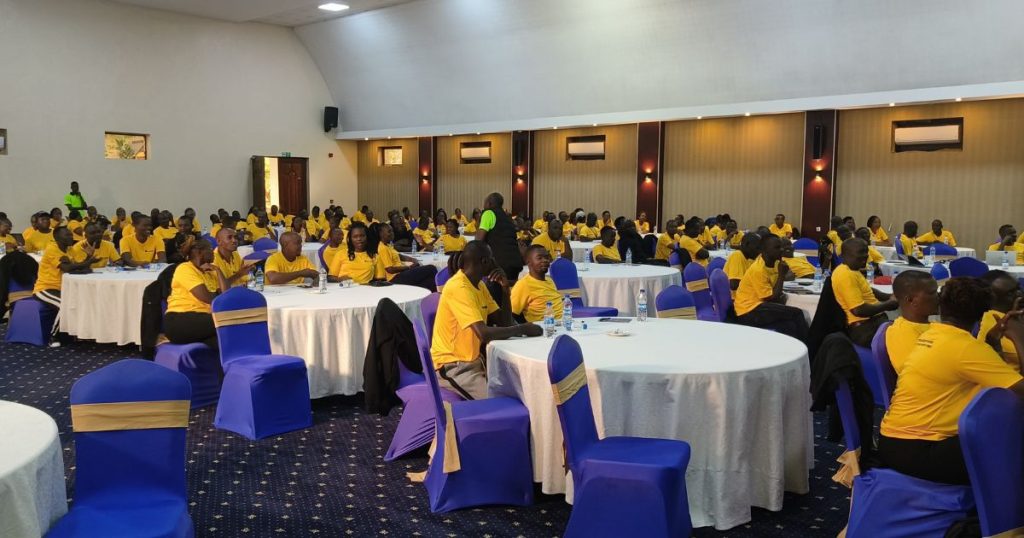
AI Training Modules for Employees.
A well-rounded workforce training curriculum bridges the gap between basic digital literacy and applied workplace solutions. Programs focus on practical application rather than complex computer coding.
+-------------------------------------------------------------------+
|               Workforce AI Learning Roadmap                       |
+-------------------------------------------------------------------+
| 1. Foundational AI Literacy & Jargon-Free Concepts                |
| 2. Generative AI Tools & Effective Prompt Engineering              |
| 3. Workflow Automation & Task Integration                         |
| 4. Data Security, Privacy & Responsible AI Ethics                 |
+-------------------------------------------------------------------+
1. Foundational AI Literacy.
Participants begin by demystifying key terms such as machine learning, natural language processing and automation. Understanding what artificial intelligence can and cannot do prevents unrealistic expectations and helps employees identify real opportunities for efficiency in their departments.
2. Applied Generative AI Tools and Prompt Engineering.
Hands-on workshops introduce popular tools like ChatGPT, Google Gemini,and Microsoft Copilot. Employees master prompt engineering—the art of giving clear, structured instructions to software—to generate draft reports, summarize complex policy documents, draft customer communications and create visual presentations.
3. Workflow Automation and Task Integration.
Training extends beyond simple text generation to connecting digital tools into daily workflows. Staff learn to automate routine email sorting, schedule calendar invites, clean spreadsheet data and build structured database reports using low-code platforms.
4. AI Ethics, Governance and Data Security.
Responsible adoption requires strict adherence to corporate compliance and data safety. Employees learn how to handle sensitive company data, maintain customer privacy under Kenya’s Data Protection Act, detect algorithmic bias and avoid uploading confidential internal records into public platforms.
Tailoring AI Training Across Departments.
Different divisions within an enterprise interact with technology in unique ways. Tailoring training modules ensures every team receives direct, relevant value for their day-to-day responsibilities.
1. Human Resources and Talent Acquisition.
HR professionals learn to leverage intelligent recruitment tools to filter resumes, craft detailed job descriptions and design customized onboarding schedules. Intelligent sentiment analysis tools also help HR teams measure employee engagement and identify wellness trends across the organization.
2. Marketing, Sales and Customer Service.
Marketing and sales teams learn to generate multi-channel content strategies, execute targeted market research and evaluate competitor positioning. Customer service teams discover how to set up intelligent support bots and automated ticket routing to resolve client issues quickly.
3. Finance, Accounting and Operations.
Finance teams discover how to use intelligent data models to forecast revenue trends, highlight budget variances and audit expense records. Operational staff use automated tracking systems to optimize inventory levels and monitor supply chain performance.
4. Executive Leadership and Board Governance.
For senior managers, training focuses on corporate strategy, risk management, policy formulation and digital governance. Leaders learn how to evaluate return on investment (ROI) for technology adoption and build a culture of continuous learning.
Comparison of AI Delivery Formats for Organizations.
Choosing the right learning delivery format depends on your team’s schedule, geographic distribution and learning preferences. The table below outlines common delivery models available for corporate teams in Kenya.
| Delivery Format | Ideal Group Size | Structure & Setup | Primary Benefit |
| Onsite Corporate Workshops | 10–50 Participants | Interactive live sessions conducted at your office premises or resort venue. | High engagement, real-time collaboration and direct team-building dynamics. |
| Virtual Live Training | Unlimited Participants | Interactive online webinars featuring screen shares, breakout rooms and live Q&A. | Cost-effective, accessible for distributed teams across multiple regional branches. |
| Hybrid Upskilling | 20–100 Participants | Combined format featuring physically hosted kick-off workshops followed by self-paced modules. | Balances hands-on practice with workplace flexibility. |
| Executive Masterclasses | 5–15 Leaders | Intensive 1-day retreat focused on high-level strategy, governance and policy formulation. | Highly focused environment tailored for senior leadership and board members. |
Key Factors Influencing Corporate AI Training Costs.
When budgeting for workforce development, organizations should evaluate key structural factors rather than relying on fixed pricing figures, which adjust over time based on project scope:
- Participant Numbers: Group training for large departments offers economies of scale, whereas smaller cohort bootcamps involve specialized, individual coaching.
- Depth of Customization: Standardized literacy modules are faster to launch, while customized programs tailored to proprietary company data and internal workflows require extra curriculum development.
- Program Duration: Needs range from single-day introductory workshops to multi-week transformational bootcamps with practical capstone projects.
- Venue and Logistics: In-house sessions held at your office reduce facility costs, while offsite corporate retreats include venue hire and catering fees.
Partnering with experienced local corporate facilitators like www.kariukikamau.com ensures your business receives a tailored curriculum built around your precise operational objectives.
10 Frequently Asked Questions (FAQs) About AI Training for Employees in Kenya.
1. What is AI training for employees in Kenya?
It is a structured corporate learning program that teaches non-technical and technical staff how to use modern digital tools, generative platforms and automation software to improve daily work productivity.
2. Do my employees need coding or technical backgrounds to attend?
No. Corporate training programs focus on practical, jargon-free applications of software, prompt engineering and everyday workplace tools that require zero programming skills.
3. Which software tools are covered in a standard workplace program?
Programs typically cover generative platforms like ChatGPT, Google Gemini, and Microsoft Copilot, alongside design, communication, spreadsheet and reporting tools.
4. How long does a corporate upskilling workshop take?
Program lengths vary based on goals, ranging from intensive 1-day executive masterclasses to 2-day team workshops or 4-week hybrid learning programs.
5. How does artificial intelligence help HR departments in Kenyan companies?
It automates resume screening, assists in drafting job posts, simplifies performance review tracking and analyzes employee engagement trends.
6. Can training programs be customized for specific industries?
Yes. Tailored curricula cater directly to the unique requirements of banking, insurance, retail, manufacturing, non-governmental organizations and education.
7. How do we keep our company’s confidential data safe while using these tools?
Training covers data governance, security protocols, private instance configurations and strict guidelines on preventing sensitive internal records from being shared on public tools.
8. What delivery modes are available for teams across East Africa?
Organizations can choose between in-person onsite workshops at their offices, virtual live webinars or hybrid learning models.
9. How do we measure the return on investment (ROI) from workforce training?
Success is evaluated by tracking time saved on administrative processes, increased output volume, improved work quality, faster response times and post-training adoption rates.
10. How can we get started with training our workforce through Kariuki Kamau?
You can initiate your corporate program by visiting www.kariukikamau.com to request a discovery consultation, discuss team requirements and receive a customized corporate proposal.
Conclusion: AI Training for Employees in Kenya.
Upskilling your team with AI Training for Employees in Kenya is one of the most impactful decisions an organization can make today. Equipping your workforce with practical digital skills builds workplace confidence, streamlines daily operations and protects your business against technological disruption. When employees understand how to use modern software as a supportive work assistant, productivity increases across every department.
To future-proof your business and build a high-performing team, work with seasoned corporate training professionals. Visit www.kariukikamau.com today to book tailored workforce upskilling workshops, executive coaching and inspirational corporate training sessions designed to elevate your business.


