
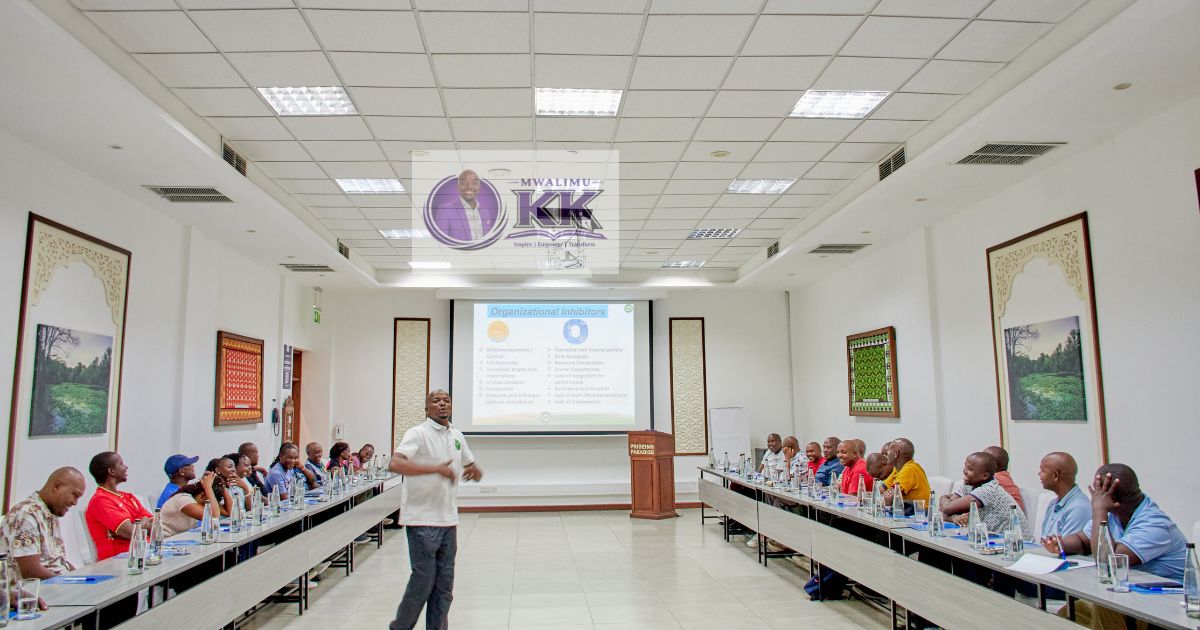
Corporate Training Courses in Kenya: Best Programs for Organizations.
The modern business environment is highly competitive, and organizations that fail to adapt are easily left behind. To build a thriving organization, your most valuable asset is not your product, but your people. Investing in Corporate Training Courses in Kenya is the proven way to empower your staff, boost overall productivity and drive long-term business growth. To explore tailored learning solutions that can elevate your business today, visit www.kariukikamau.com. In this comprehensive guide, we will break down the most highly sought-after professional skills courses, how to choose the right trainers and why continuous learning is non-negotiable for success.
The Changing Landscape of the Kenyan Workplace.
The corporate landscape in Kenya has experienced massive shifts over the past few years. Advancements in technology, changing consumer behaviors and a highly competitive job market mean that the skills that worked a decade ago are no longer sufficient today. Companies are now looking for dynamic employees who can solve complex problems, manage client relationships effectively and adapt to digital transformations seamlessly.
When organizations ignore the need for capacity building, they experience stagnation. Employees become disengaged, customer complaints rise and operational efficiency drops. On the other hand, companies that prioritize continuous learning create a culture of excellence. By providing regular professional development, you show your employees that you value their career growth.
This is where finding the right staff training companies in Nairobi and across the country becomes critical. Professional trainers bring an external perspective, identify hidden performance gaps and introduce global best practices that your team can apply immediately. Partnering with a dedicated consultant through platforms like www.kariukikamau.com ensures your team gets training that aligns directly with your corporate vision.
Why Your Organization Needs Corporate Training.
Before diving into the specific courses, it is important to understand the direct return on investment that comes from upskilling your workforce. Training is not just a human resource formality; it is a strategic business tool. Here is why you must invest in professional skills courses in Kenya:
- Improved Employee Productivity: Training equips your staff with faster, more efficient ways to execute their daily tasks. When employees know exactly what is expected of them and have the tools to do it, operational output increases significantly.
- Higher Employee Retention: Top talent wants to work for organizations that invest in their future. Providing clear pathways for learning reduces staff turnover, saving you the high costs associated with recruiting and onboarding new hires.
- Enhanced Customer Satisfaction: Frontline employees are the face of your business. When they are trained to communicate effectively and handle disputes professionally, client satisfaction and brand loyalty naturally go up.
- Stronger Leadership Pipelines: Organizations that train their staff regularly never struggle to fill management positions. Training helps you identify emerging leaders and prepares them to take on executive roles in the future.
- Better Risk Management: Compliance and regulatory courses ensure your staff understand industry laws, significantly reducing the risk of legal penalties and corporate scandals.
Top Corporate Training Courses in Kenya.
To get the best results, you must match the training program to your specific organizational needs. Here are the most impactful and highly requested training programs for businesses in Kenya today.
1. Leadership and Executive Management.
Every successful organization requires visionary and emotionally intelligent leadership. Leadership development programs in Kenya are designed for supervisors, mid-level managers and C-suite executives. These courses focus on strategic decision-making, effective delegation, conflict resolution and change management.
A common mistake companies make is promoting their best technical workers to management without giving them executive coaching in Kenya. Leading people is entirely different from managing tasks. Top-tier leadership training helps managers transition from giving orders to genuinely inspiring their teams to achieve corporate goals.
2. Customer Service and Client Experience.
In a market where products and services are increasingly similar, exceptional customer service is your most powerful differentiator. Customer experience training goes far beyond teaching staff how to smile and answer phone calls.
The best courses teach your team how to handle difficult clients, manage customer feedback, de-escalate conflicts and build long-term brand loyalty. Excellent customer service directly translates into repeat business and higher revenue. Employees learn how to anticipate customer needs and deliver memorable experiences that turn casual buyers into brand ambassadors.
3. Sales, Digital Marketing and Revenue Growth.
No business can survive without a consistent flow of sales. Modern sales training courses in Kenya equip your sales and marketing teams with advanced negotiation techniques, lead generation strategies and closing skills.
Furthermore, with the rise of the digital economy, training your staff in digital marketing, social media management and search engine optimization (SEO) is no longer optional. These courses help companies dominate the online space, reach a wider audience and adapt to modern buying behaviors. If your team is struggling to hit their revenue targets, a tailored sales clinic could be the exact solution you need.
4. Human Resource Management and Compliance.
Managing human capital is one of the most complex yet essential tasks in any business. HR training courses cover critical aspects such as modern recruitment strategies, employee performance evaluations and workplace dispute resolution.
Additionally, these courses ensure that your HR department remains fully compliant with Kenyan labor laws. Understanding statutory deductions, fair dismissal procedures and workplace safety regulations protects your company from costly legal disputes and penalties.
5. Team Building Workshops and Communication.
Poor communication and siloed departments can destroy a company’s efficiency. Team building workshops in Kenya are specifically designed to break down barriers between departments and foster a spirit of collaboration.
Effective team building is not just about playing games; it involves structured activities that reveal communication gaps, build trust and encourage creative problem-solving. When employees understand each other’s strengths and communication styles, they work together much more effectively. For expertly guided corporate retreats and team bonding sessions, www.kariukikamau.com offers comprehensive packages that blend fun with deep, actionable learning.
6. IT, Cyber Security and Data Analytics.
Technology is the backbone of modern business operations. With the rise of cyber threats, corporate training in IT security is vital to protect your company’s sensitive data. A single data breach can cost a company millions and ruin its reputation permanently.
Additionally, courses in data analytics and artificial intelligence teach employees how to interpret customer data. This allows your organization to make informed, data-driven business decisions rather than relying on guesswork. Training your staff to use the latest digital tools ensures your company remains agile and competitive.
How to Choose the Best Training Providers in Kenya.
With so many staff training companies in Nairobi, selecting the right partner can be overwhelming. Here are the key factors you should consider to ensure you get the best value for your investment:
1. Customization Over Generic Content.
Avoid training companies that offer one-size-fits-all solutions. The best trainers will take the time to conduct a needs assessment, understand your specific business challenges and tailor the curriculum to address those exact gaps.
2. Look for NITA Certified Training Providers.
The National Industrial Training Authority (NITA) regulates industrial training in Kenya. Working with NITA certified training providers ensures that the training meets strict national quality standards. Furthermore, registered employers can claim reimbursements from NITA for training expenses incurred, which makes the training much more cost-effective for your business.
3. Industry Experience and Practical Approach.
Ensure that the facilitators have real-world corporate experience. Theoretical knowledge is good, but practical, actionable strategies are what drive results in the workplace. Check their track record, client testimonials and their ability to engage adult learners. You can find highly experienced corporate trainers with proven track records by visiting www.kariukikamau.com.
Budgeting for Corporate Training: What to Expect.
A common question among business owners and HR managers is how much they should set aside for staff development. When budgeting for professional skills courses in Kenya, it is important to remember that you should not look for fixed price figures.
The costs of training programs change with time due to various factors, including the number of participants, the duration of the course, venue requirements and the level of customization needed. Because actual price figures vary from one season to another, presenting static numbers can be misleading. Instead of looking for a fixed menu of prices, the best approach is to reach out directly to your preferred consultant and request a customized, up-to-date quotation that fits your specific organizational needs.
Measuring the Success of Your Training Programs.
Training is an investment, and like any investment, you must measure its return. To ensure that your chosen Corporate Training Courses in Kenya are actually working, you need to track Key Performance Indicators (KPIs) before and after the sessions.
You can measure success by looking for tangible improvements such as higher sales conversions, faster project completion rates, fewer customer complaints and improved employee retention. Additionally, conducting post-training surveys and assessments will help you gauge how well your staff absorbed the material. A good training provider will always include a post-training evaluation to ensure the skills are practically applied in the workplace.
Conclusion: Corporate Training Courses in Kenya.
The success of any business ultimately comes down to the quality and competence of its workforce. By investing in Corporate Training Courses in Kenya, you are giving your team the tools they need to innovate, collaborate and outperform the competition. Whether you need executive leadership coaching, customer service excellence or high-energy team-building workshops, prioritizing professional development is the smartest move your organization can make. Remember, the market is always evolving, and continuous learning is the only way to stay ahead. Ready to transform your team’s productivity and drive massive business growth? Book an expert consultation and explore custom training programs today at www.kariukikamau.com.
10 Frequently Asked Questions (FAQs) About Corporate Training Courses in Kenya.
1. What are Corporate Training Courses in Kenya?
These are structured educational programs designed to improve the professional skills, knowledge and efficiency of employees within an organization. They cover various areas like leadership, sales and customer service.
2. Why should my company invest in staff training?
Training boosts employee productivity, increases job satisfaction, reduces staff turnover and ultimately improves your company’s profitability and competitive edge in the market.
3. Are there customized training programs for small businesses?
Yes. Professional trainers can tailor their courses to fit the specific needs, team size and goals of small and medium-sized enterprises (SMEs). For personalized small business training, check out www.kariukikamau.com.
4. What does it mean for a trainer to be NITA certified?
A NITA certified trainer has been vetted and approved by the National Industrial Training Authority, meaning their courses meet national standards. It also allows contributing employers to apply for training cost reimbursements.
5. How much do corporate training programs cost in Kenya?
Pricing is not fixed because actual price figures vary based on the duration, level of customization and the size of your team. It is highly recommended to request a direct quote to get accurate, current estimates.
6. Where are these corporate training sessions usually held?
Training can be conducted in-house at your company premises, online via virtual platforms or off-site at dedicated conference centers and retreat venues depending on your preference.
7. How long do corporate training courses typically take?
The duration varies widely. Some are short, intensive half-day boot camps, while executive leadership development programs can span several weeks or months of continuous coaching.
8. Can team building be considered a corporate training course?
Absolutely. Structured team building workshops in Kenya are a vital form of experiential training that improves interpersonal communication, trust and collaborative problem-solving among staff.
9. How do I measure the return on investment (ROI) for staff training?
You can measure ROI by tracking performance metrics such as increased sales revenue, faster turnaround times, improved customer satisfaction scores and reduced employee turnover after the training.
10. How often should a company train its employees?
While the frequency depends on industry changes and company goals, best practices suggest conducting major training sessions at least bi-annually, with continuous micro-learning opportunities throughout the year.


